Flame Scallop
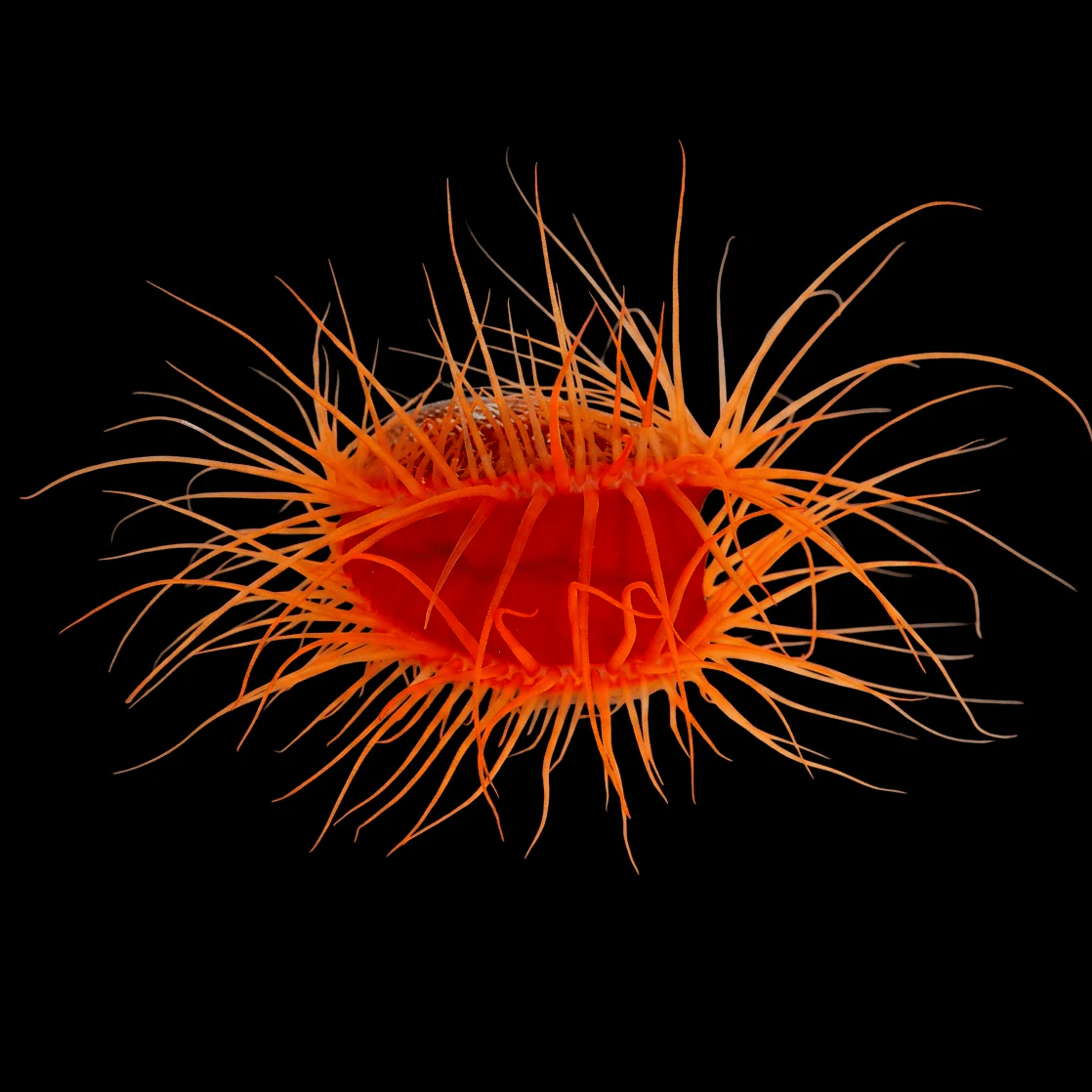
Introduction to Flame Scallop (Lima scabra) – Flashing Filter Feeder
The flame scallop (Lima scabra) is a stunning filter-feeding invertebrate known for its bright red mantle, elongated tentacles, and unique ability to produce bioluminescent-like flashes. These scallops do not rely on light for survival but instead filter-feed on planktonic organisms suspended in the water column. Although visually striking, flame scallops are challenging to keep and require frequent, targeted feedings of planktonic foods to survive in home aquariums.
Care Requirements
Care Level: Difficult – Requires frequent feedings of planktonic food Minimum Tank Size: 30+ gallons Aquarium Setup: Prefers shaded rock crevices or overhangs Flame scallops are non-photosynthetic and thrive in low-light areas with moderate water flow, where they can anchor themselves using byssal threads.
Diet & Nutrition
Flame scallops are obligate filter feeders that rely on a constant supply of microscopic food in the water column. Diet: Filter feeder – Requires phytoplankton, zooplankton, and suspended organics Recommended Foods: Live and cultured phytoplankton Zooplankton and marine snow Liquid coral foods and fine particulate feeds Due to their high feeding demands, flame scallops are not ideal for new tanks or systems with low planktonic density. Automated dosing or frequent manual feedings are required for long-term success.
Lifespan & Growth Rate
Lifespan: 1-3 years (in optimal conditions) Growth Rate: Moderate – Can grow up to 3-4 inches Flame scallops do not reproduce in captivity and often have reduced lifespans due to inadequate feeding in home aquariums.
Temperament & Compatibility
Temperament: Peaceful – Does not interact with or harm tankmates Reef Safe? Yes – Does not harm corals, fish, or invertebrates Flame scallops are compatible with most peaceful reef inhabitants, including: Clownfish Gobies Blennies Shrimp and other filter feeders Avoid housing them with aggressive or nipping species, such as: Large angelfish Triggers and puffers Wrasses that may pick at invertebrates Due to their sensitive nature, they should be kept in stable, mature reef tanks with good filtration.
Common Challenges & Considerations
Difficult to Feed: Requires frequent feedings of planktonic food to survive. May Relocate Frequently: Will move to shaded or hidden areas if stressed. Short Lifespan in Captivity: Often does not thrive long-term without expert care. For best results, maintain a nutrient-rich water column and stable conditions while ensuring regular, targeted feeding.
Water Conditions
Temperature: 74-78°F dKH (Alkalinity): 8-12 pH: 8.1-8.4 Specific Gravity: 1.024-1.026
Product Information
Product Information
Shipping & Returns
Shipping & Returns
Description
Introduction to Flame Scallop (Lima scabra) – Flashing Filter Feeder
The flame scallop (Lima scabra) is a stunning filter-feeding invertebrate known for its bright red mantle, elongated tentacles, and unique ability to produce bioluminescent-like flashes. These scallops do not rely on light for survival but instead filter-feed on planktonic organisms suspended in the water column. Although visually striking, flame scallops are challenging to keep and require frequent, targeted feedings of planktonic foods to survive in home aquariums.
Care Requirements
Care Level: Difficult – Requires frequent feedings of planktonic food Minimum Tank Size: 30+ gallons Aquarium Setup: Prefers shaded rock crevices or overhangs Flame scallops are non-photosynthetic and thrive in low-light areas with moderate water flow, where they can anchor themselves using byssal threads.
Diet & Nutrition
Flame scallops are obligate filter feeders that rely on a constant supply of microscopic food in the water column. Diet: Filter feeder – Requires phytoplankton, zooplankton, and suspended organics Recommended Foods: Live and cultured phytoplankton Zooplankton and marine snow Liquid coral foods and fine particulate feeds Due to their high feeding demands, flame scallops are not ideal for new tanks or systems with low planktonic density. Automated dosing or frequent manual feedings are required for long-term success.
Lifespan & Growth Rate
Lifespan: 1-3 years (in optimal conditions) Growth Rate: Moderate – Can grow up to 3-4 inches Flame scallops do not reproduce in captivity and often have reduced lifespans due to inadequate feeding in home aquariums.
Temperament & Compatibility
Temperament: Peaceful – Does not interact with or harm tankmates Reef Safe? Yes – Does not harm corals, fish, or invertebrates Flame scallops are compatible with most peaceful reef inhabitants, including: Clownfish Gobies Blennies Shrimp and other filter feeders Avoid housing them with aggressive or nipping species, such as: Large angelfish Triggers and puffers Wrasses that may pick at invertebrates Due to their sensitive nature, they should be kept in stable, mature reef tanks with good filtration.
Common Challenges & Considerations
Difficult to Feed: Requires frequent feedings of planktonic food to survive. May Relocate Frequently: Will move to shaded or hidden areas if stressed. Short Lifespan in Captivity: Often does not thrive long-term without expert care. For best results, maintain a nutrient-rich water column and stable conditions while ensuring regular, targeted feeding.
Water Conditions
Temperature: 74-78°F dKH (Alkalinity): 8-12 pH: 8.1-8.4 Specific Gravity: 1.024-1.026