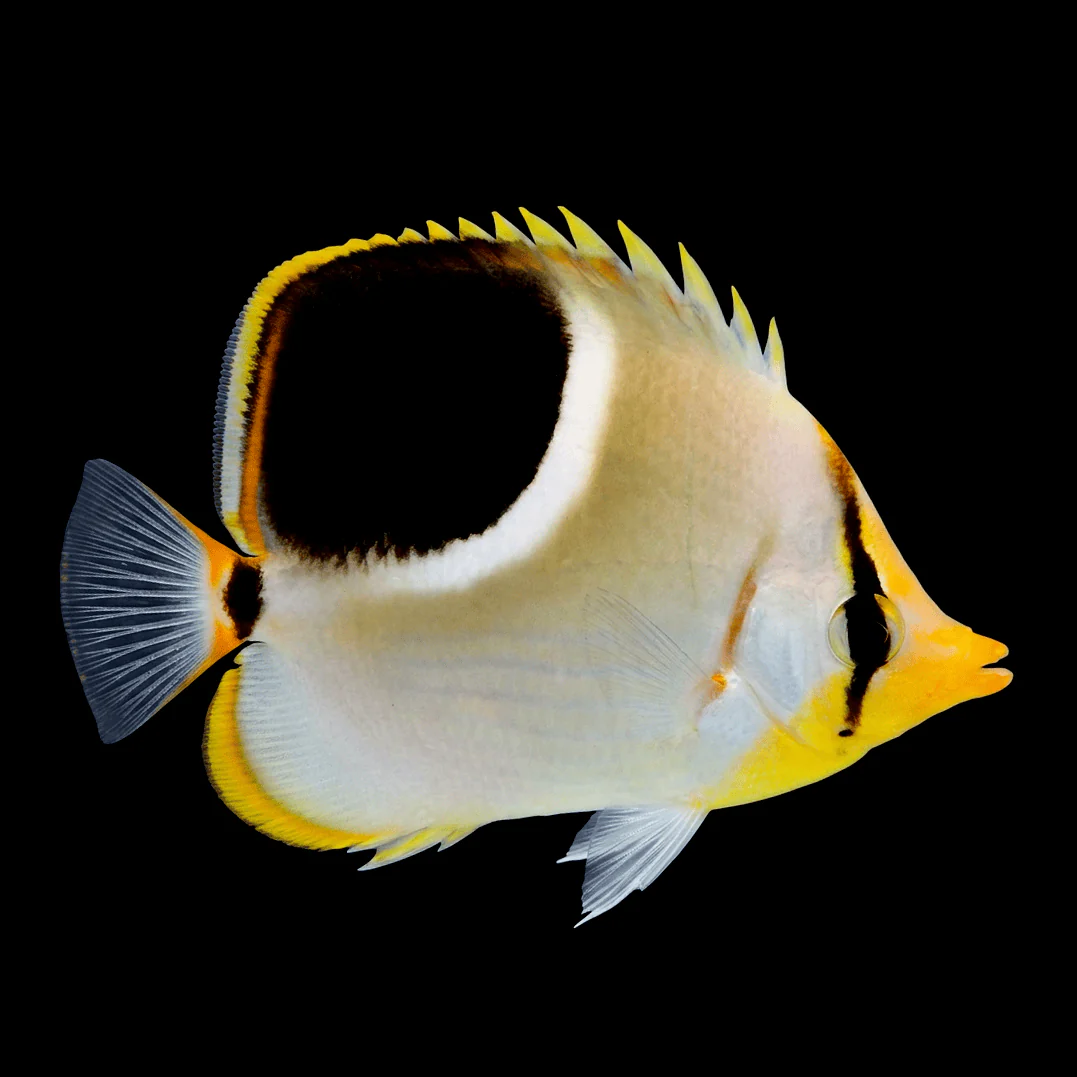
Saddleback Butterflyfish - Chaetodon ephippium
Introduction to Saddleback Butterflyfish (Chaetodon ephippium)
The Saddleback Butterflyfish is a bold and eye-catching species known for the large dark “saddle” marking across its back and bright yellow body. Native to Indo-Pacific reefs, these fish are active swimmers that spend their time picking at rockwork and cruising open water. While they are hardy compared to some butterflyfish, their natural diet and tendency to nip make them better suited for fish-only or carefully planned reef systems.
Care Requirements
Care Level: Moderate
Minimum Tank Size: 125+ gallons
Aquarium Setup: Requires ample swimming space, stable rockwork, and a well-established system
Saddleback Butterflyfish are active and grow relatively large, so they need a tank that provides both open swimming room and areas to explore.
Diet & Nutrition
Saddleback Butterflyfish are omnivores that require a varied diet to stay healthy in captivity.
Diet: Omnivorous – Meaty foods with some algae-based nutrition
Recommended Foods:
- Mysis shrimp, brine shrimp, and chopped seafood
- High-quality frozen preparations
- Spirulina-based foods and algae sheets
- Occasional live foods to encourage feeding
They typically adapt well to prepared foods, especially when offered a mix of options.
Lifespan & Growth Rate
Lifespan: 5–10+ years
Growth Rate: Moderate to Fast – Can reach up to 10–12 inches
Due to their size and activity level, long-term planning for tank space is important.
Temperament & Compatibility
Temperament: Semi-Aggressive
Reef Safe? No – Will nip at corals, polyps, and invertebrates
Saddleback Butterflyfish are best kept with other semi-aggressive fish in fish-only systems. They may become territorial as they mature and should not be housed with overly passive species.
Common Challenges & Considerations
- Not Reef Safe: Known to pick at corals and sessile invertebrates
- Large Adult Size: Requires a spacious tank as it grows
- Active Swimmer: Needs plenty of open space to prevent stress
- Territorial Behavior: Can become more aggressive over time
Water Conditions
Temperature: 75–77°F
dKH (Alkalinity): 8–12
pH: 8.1–8.3
Specific Gravity: 1.024–1.026
Original: $76.99
-65%$76.99
$26.95Product Information
Product Information
Shipping & Returns
Shipping & Returns
Description
Introduction to Saddleback Butterflyfish (Chaetodon ephippium)
The Saddleback Butterflyfish is a bold and eye-catching species known for the large dark “saddle” marking across its back and bright yellow body. Native to Indo-Pacific reefs, these fish are active swimmers that spend their time picking at rockwork and cruising open water. While they are hardy compared to some butterflyfish, their natural diet and tendency to nip make them better suited for fish-only or carefully planned reef systems.
Care Requirements
Care Level: Moderate
Minimum Tank Size: 125+ gallons
Aquarium Setup: Requires ample swimming space, stable rockwork, and a well-established system
Saddleback Butterflyfish are active and grow relatively large, so they need a tank that provides both open swimming room and areas to explore.
Diet & Nutrition
Saddleback Butterflyfish are omnivores that require a varied diet to stay healthy in captivity.
Diet: Omnivorous – Meaty foods with some algae-based nutrition
Recommended Foods:
- Mysis shrimp, brine shrimp, and chopped seafood
- High-quality frozen preparations
- Spirulina-based foods and algae sheets
- Occasional live foods to encourage feeding
They typically adapt well to prepared foods, especially when offered a mix of options.
Lifespan & Growth Rate
Lifespan: 5–10+ years
Growth Rate: Moderate to Fast – Can reach up to 10–12 inches
Due to their size and activity level, long-term planning for tank space is important.
Temperament & Compatibility
Temperament: Semi-Aggressive
Reef Safe? No – Will nip at corals, polyps, and invertebrates
Saddleback Butterflyfish are best kept with other semi-aggressive fish in fish-only systems. They may become territorial as they mature and should not be housed with overly passive species.
Common Challenges & Considerations
- Not Reef Safe: Known to pick at corals and sessile invertebrates
- Large Adult Size: Requires a spacious tank as it grows
- Active Swimmer: Needs plenty of open space to prevent stress
- Territorial Behavior: Can become more aggressive over time
Water Conditions
Temperature: 75–77°F
dKH (Alkalinity): 8–12
pH: 8.1–8.3
Specific Gravity: 1.024–1.026