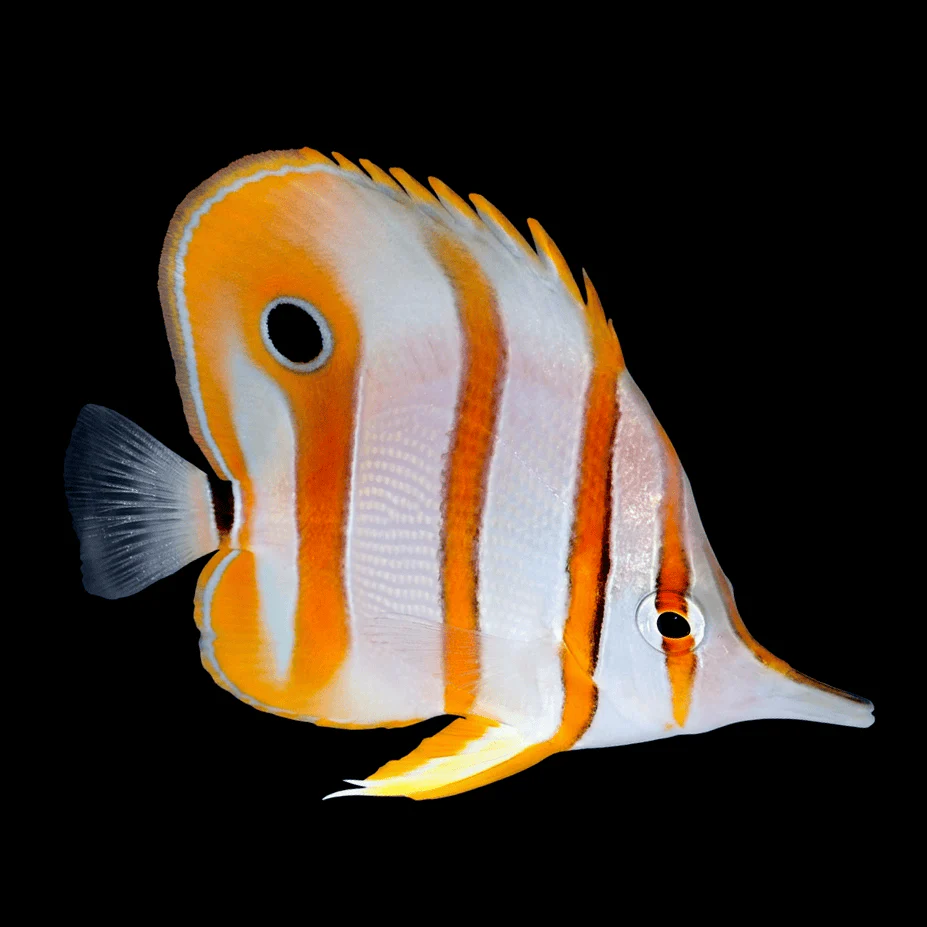
Copperband Butterfly - Chelmon rostratus
Introduction to Copperband Butterflyfish (Chelmon rostratus)
The Copperband Butterflyfish is one of the most recognizable and sought-after saltwater fish, known for its striking vertical copper bands and elongated snout. Native to Indo-Pacific reefs, these fish are often seen picking at rockwork in search of small invertebrates. They are especially popular among reef keepers for their potential to help control nuisance pests like Aiptasia. However, their specialized feeding habits and sensitivity make them better suited for experienced aquarists with established systems.
Care Requirements
Care Level: Moderate to Difficult
Minimum Tank Size: 75+ gallons
Aquarium Setup: Requires mature live rock with natural food sources, plenty of swimming space, and stable water parameters
Copperbands do best in established aquariums where they can continuously graze throughout the day. A calm environment with minimal aggression from tankmates is key to helping them acclimate.
Diet & Nutrition
Copperband Butterflyfish are carnivores with specialized feeding behavior, often targeting small worms, crustaceans, and pest anemones.
Diet: Carnivorous – Prefers live and frozen meaty foods
Recommended Foods:
- Live blackworms (great for initial feeding response)
- Frozen mysis shrimp and brine shrimp
- Clams or mussels on the half shell
- Small crustaceans found in live rock
Getting them to eat prepared foods can be one of the biggest challenges. Offering a variety of options and starting with live foods often improves success.
Lifespan & Growth Rate
Lifespan: 5–10+ years
Growth Rate: Moderate – Can reach up to 7–8 inches
With proper care and consistent feeding, they can grow steadily and adapt well to captivity.
Temperament & Compatibility
Temperament: Peaceful
Reef Safe? With Caution – May pick at feather dusters, clams, and some corals
Copperbands are generally non-aggressive and do best with other peaceful tankmates. They should not be housed with aggressive or highly competitive feeders, as this can prevent them from getting enough food.
Common Challenges & Considerations
- Feeding Difficulty: Many individuals struggle to accept prepared foods
- Sensitivity to Stress: Requires stable water conditions and a calm tank environment
- Competition for Food: Can be outcompeted by aggressive eaters
- Pest Control Expectations: While they may eat Aiptasia, results are not guaranteed
Water Conditions
Temperature: 75–77°F
dKH (Alkalinity): 8–12
pH: 8.1–8.3
Specific Gravity: 1.024–1.026
Original: $79.99
-65%$79.99
$28.00Product Information
Product Information
Shipping & Returns
Shipping & Returns
Description
Introduction to Copperband Butterflyfish (Chelmon rostratus)
The Copperband Butterflyfish is one of the most recognizable and sought-after saltwater fish, known for its striking vertical copper bands and elongated snout. Native to Indo-Pacific reefs, these fish are often seen picking at rockwork in search of small invertebrates. They are especially popular among reef keepers for their potential to help control nuisance pests like Aiptasia. However, their specialized feeding habits and sensitivity make them better suited for experienced aquarists with established systems.
Care Requirements
Care Level: Moderate to Difficult
Minimum Tank Size: 75+ gallons
Aquarium Setup: Requires mature live rock with natural food sources, plenty of swimming space, and stable water parameters
Copperbands do best in established aquariums where they can continuously graze throughout the day. A calm environment with minimal aggression from tankmates is key to helping them acclimate.
Diet & Nutrition
Copperband Butterflyfish are carnivores with specialized feeding behavior, often targeting small worms, crustaceans, and pest anemones.
Diet: Carnivorous – Prefers live and frozen meaty foods
Recommended Foods:
- Live blackworms (great for initial feeding response)
- Frozen mysis shrimp and brine shrimp
- Clams or mussels on the half shell
- Small crustaceans found in live rock
Getting them to eat prepared foods can be one of the biggest challenges. Offering a variety of options and starting with live foods often improves success.
Lifespan & Growth Rate
Lifespan: 5–10+ years
Growth Rate: Moderate – Can reach up to 7–8 inches
With proper care and consistent feeding, they can grow steadily and adapt well to captivity.
Temperament & Compatibility
Temperament: Peaceful
Reef Safe? With Caution – May pick at feather dusters, clams, and some corals
Copperbands are generally non-aggressive and do best with other peaceful tankmates. They should not be housed with aggressive or highly competitive feeders, as this can prevent them from getting enough food.
Common Challenges & Considerations
- Feeding Difficulty: Many individuals struggle to accept prepared foods
- Sensitivity to Stress: Requires stable water conditions and a calm tank environment
- Competition for Food: Can be outcompeted by aggressive eaters
- Pest Control Expectations: While they may eat Aiptasia, results are not guaranteed
Water Conditions
Temperature: 75–77°F
dKH (Alkalinity): 8–12
pH: 8.1–8.3
Specific Gravity: 1.024–1.026